


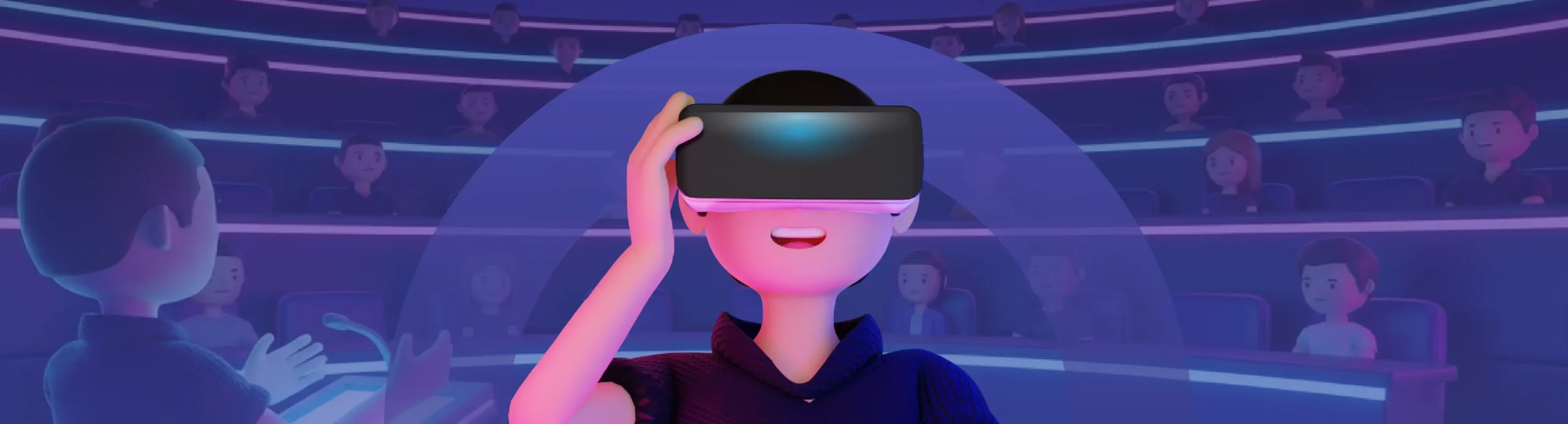
In large university classes, it is quite common for students, particularly those who are naturally shy, to remain quiet and refrain from active participation. Many of these students experience anxiety when it comes to delivering speeches or presentations to a large audience, often feeling overwhelmed by the dynamic and intimidating atmosphere of the lecture hall. Despite these challenges, mastering oral communication and presentation skills is a key competency for university students today. These abilities are not only essential soft skills but are also highly sought after in the professional world, particularly for new graduates stepping into the workforce.
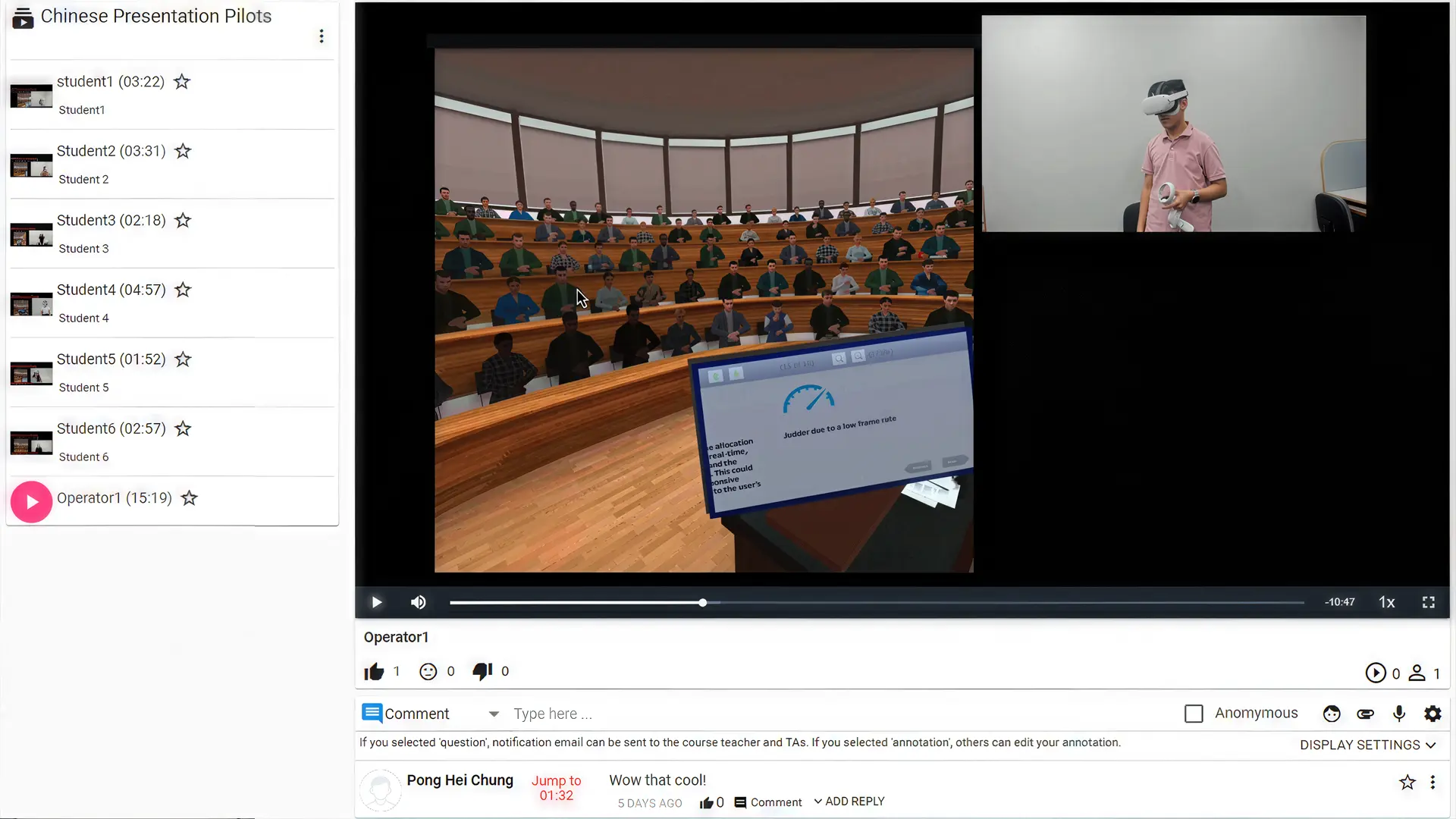
To help students overcome the psychological barriers linked to public speaking, particularly the anxiety of addressing a large audience, the Teaching and Learning Innovation Centre (TALIC) has partnered with the following three key language teaching sectors of HKU in creating an innovative AI-assisted virtual reality (VR) environment:
- Chinese Language Enhancement Programme (CLEP) of the School of Chinese
- Chinese Language Centre (CLC) of the School of Chinese
- Centre for Applied English Studies (CAES)
This innovative AI-assisted virtual reality (VR) enables students to participate in self-paced practice sessions designed to refine their public speaking skills, and has garnered positive feedback from those who have experienced it.
Self-regulated Learning in an Immersive VR & Simulated Environment
Just a few years ago, the idea of students practicing public speaking independently within a virtual environment using the Oculus VR headset would have seemed improbable. Today, however, VR and AR technologies are being broadly utilized at HKU to create immersive and simulate environments for students’ self-regulated learning across various disciplines, including applications in clinical practice and beyond.
According to a May 2025 report by EDUCAUSE, advancements in technology—particularly in artificial intelligence and virtual reality—are fundamentally transforming how students engage with content. These innovations are reshaping our understanding of cognition and altering the ways in which learning is documented and valued.
Realistic Setting With Real-Time & Post-Speech AI-Powered Feedback

Within this virtual environment, students can choose from a variety of simulated settings for their practice sessions, such as a large lecture hall, a classroom, or a conference room. The audience comprises their teachers, peers, and other simulated attendees. To enhance realism and engagement, students may encounter distracting noises like background conversations, ringing phones, snoring, and other unforeseen disruptions, both technical and non-technical.

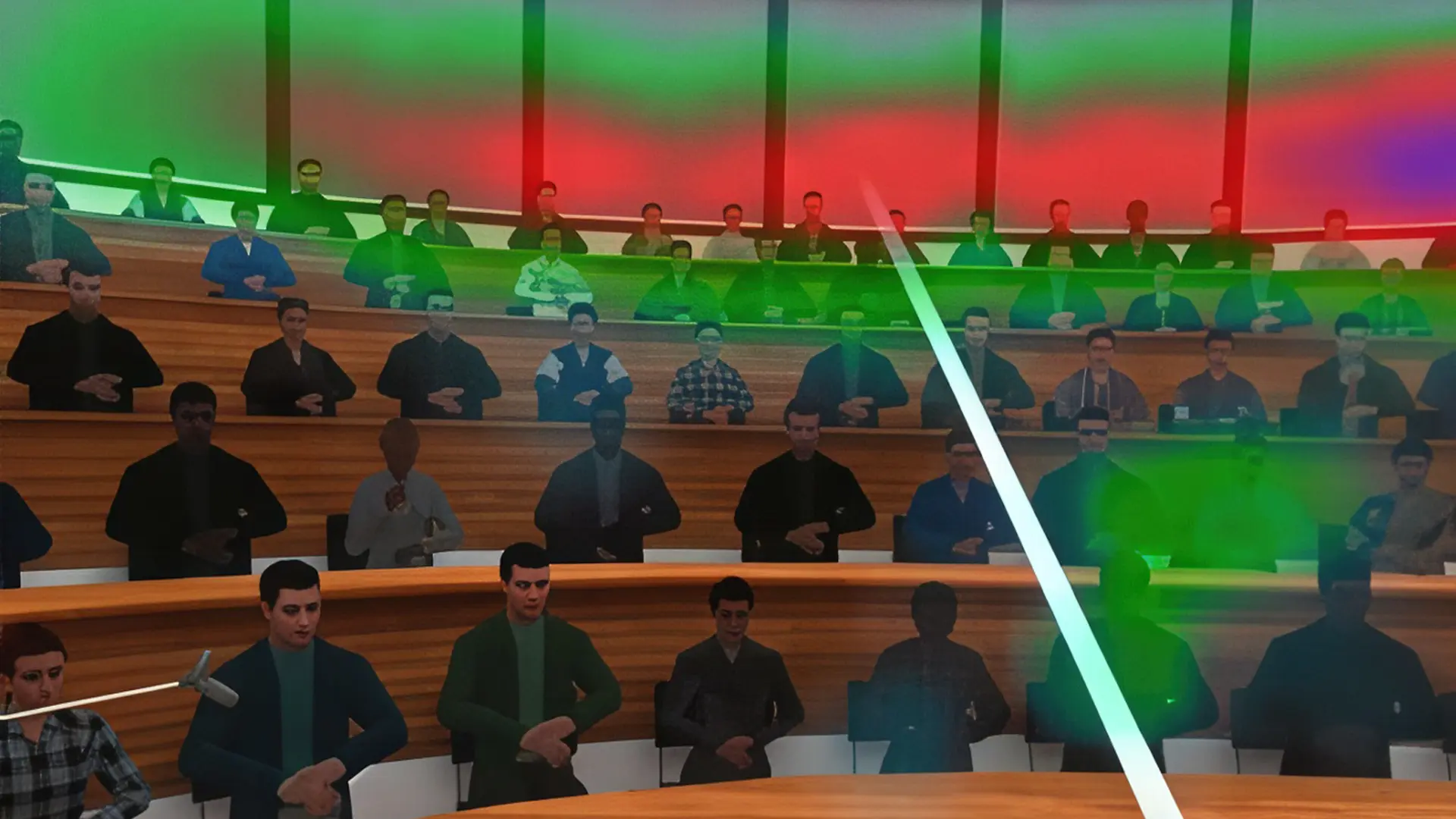
Students also have the opportunity to upload their own PowerPoint presentations into the virtual setting and practice their speech with the help of a timer. AI technology tracks their eye movements during the presentation, allowing students to review a heat map of their eye contact distribution after each session. Additionally, teachers can upload presentation rubrics into the system, and the AI-powered analysis can assist them in reviewing recorded student performances while providing timely and constructive feedback to help improve their presentation skills.
Integrating AI-assisted VR technology in public speaking training is an innovative and essential intervention. By helping students reduce public speaking anxiety, they are empowered to master vital communication skills and improve their confidence in public speaking. This prepares and equips students for both academic challenges and future professional success.
Reference:
Huang, P. W., & Hwang, Y. L. (2025). The effectiveness of AI-integrated VR oral training application in reducing public speaking anxiety and interview anxiety. Computers and Education: Artificial Intelligence, 100514.
Rodero, E., & Larrea, O. (2022). Virtual reality with distractors to overcome public speaking anxiety in university students. Comunicar: Media Education Research Journal, 30(72), 85-96.
Robert, J., Muscanell, N., McCormack, M., Pelletier, K., Arnold, K., Arbino, N., Young, K., & Reeves, J. (2025). The 2025 EDUCAUSE Horizon Report | Teaching and learning edition. EDUCAUSE.