

Detail
Abstract
Higher education is facing a variety of challenges in the current rapidly changing world. The fact that many, more traditional disciplines have become well developed, unfortunately, implies the escalated difficulty in achieving new breakthroughs and the need for highly specialised professionals. This, in turn, has urged the need for university graduates who can integrate different disciplines to innovate for tackling new and old problems of the world, not to mention many grand issues we are struggling with now are interdisciplinary in nature (such as climate change, poverty and well-being of people). The advent of more and more competent artificial intelligence (AI) systems that can handle a widely expanding list of tasks on par with (and sometimes arguably better than) humans has definitely exacerbated the need for adjustments in higher education. With AI capable of handling many technical details, it would be important in equipping our students with a wide but deep enough range of knowledge and skills to manage and collaborate with AI to solve problems. Mirroring the need for wide preparation is the (at least) equally diverse prior background of our students, who join the University with a wide variety of former academic background and learning needs.
With the aim of nurturing future generations of innovators in Hong Kong, the School of Innovation was established amidst these challenges. The first cohort of around 40 students, coming from different high school curricula with different cultural backgrounds and prior academic preparations, started their undergraduate journey in Semester 1 of 2025/26. With the aim of facilitating further discussions on better pedagogical practices, this seminar shares our first experience in designing and implementing four courses for equipping students with foundational STEM knowledge and skills to empower them for future exploration in innovation. These four courses covered computational thinking, the use of matrices, mathematical modelling and data science, key areas we identified as important for future applications while trying not to bias towards a particular discipline. We will reflect on our course design in response to the advent of powerful AI, shifting the course focus from in-depth academic discussions to solving problems. We will discuss our adoption of a mixture of individual versus group, open- versus closed-ended, AI-embracing versus paper-and-pen assessments for facilitation of learning. Examples of students’ use of AI and their reflections will also be shared.
About the Speaker(s)
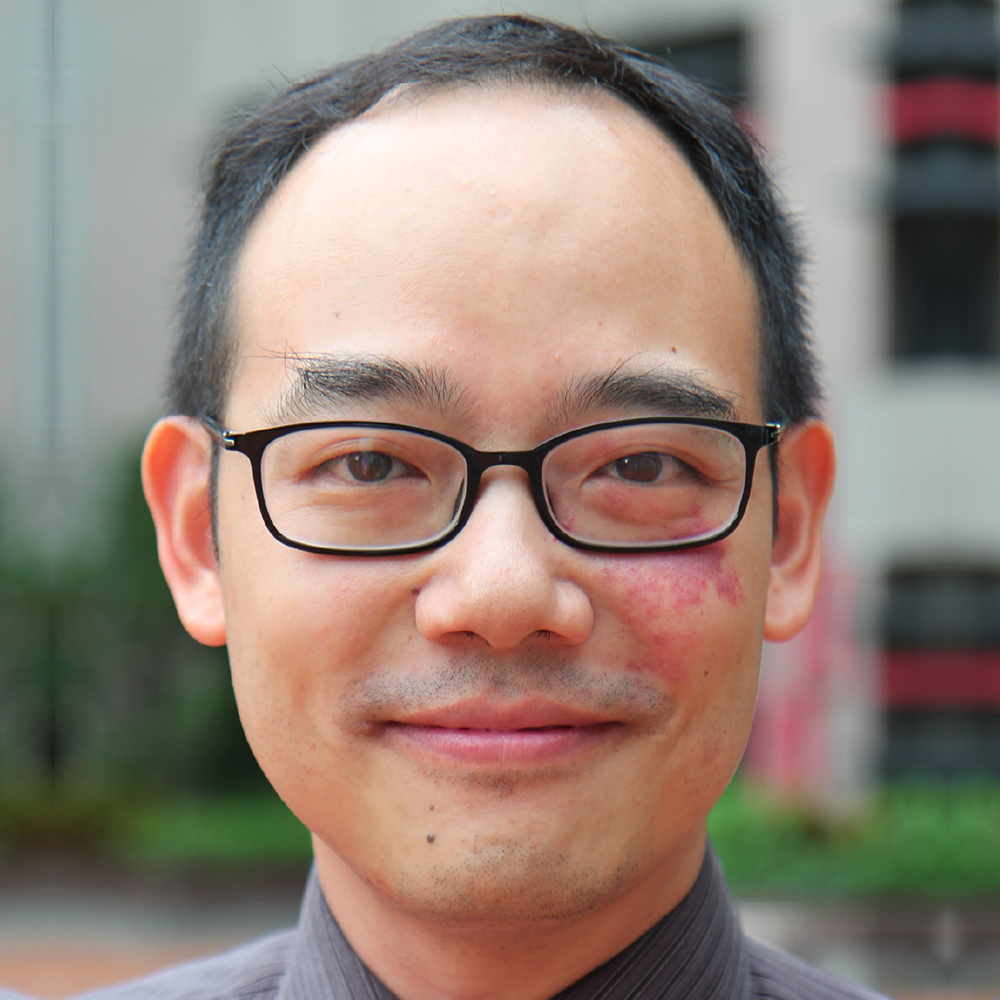
Dr. Chris Yulun Zhou received training in Physics as well as Urban Data Science. He has applied data science and artificial intelligence to better understand urban development. He is currently an adjunct assistant professor and co-teach a course for the School of Innovation to introduce data science and machine learning to undergraduate students.