

A common challenge for pre-service teachers is the difficulty of integrating theory into practice, often resulting in discrepancies between their instructional ideas and actual classroom outcomes. Many pre-service teachers (PSTs) find themselves being “over-ambitious” setting objectives that are too difficult without providing appropriate scaffolding for their students.
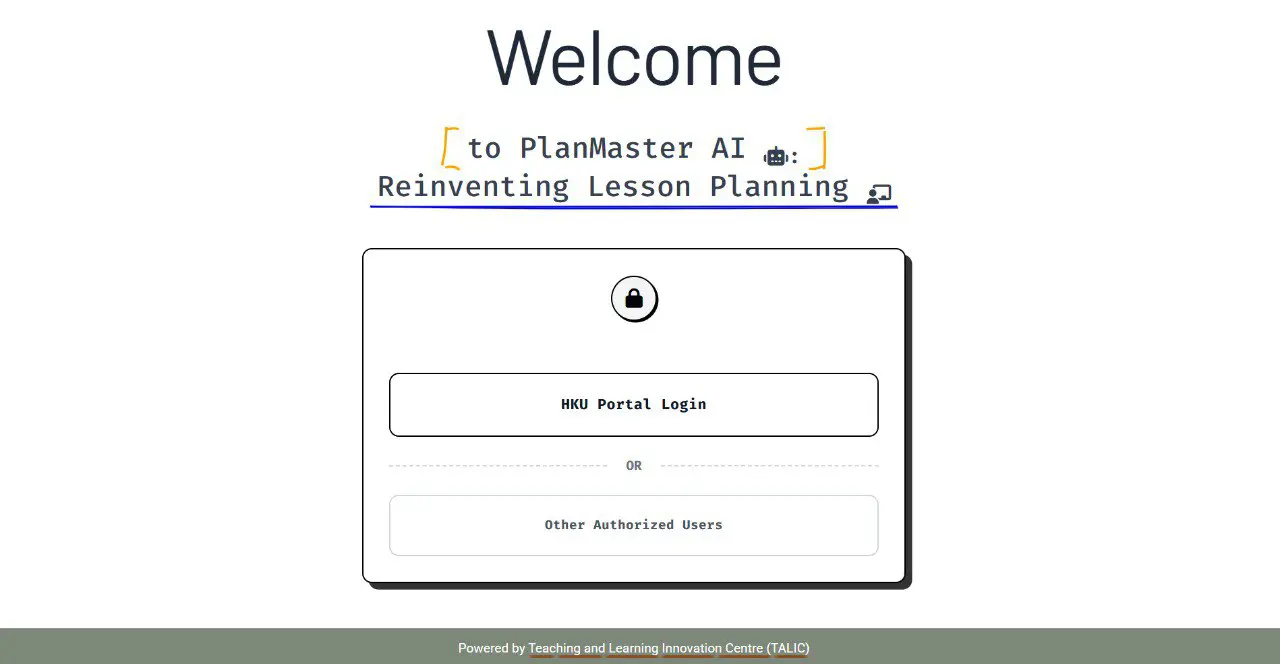
“Plan Master AI acts like a “GPS for Lesson Design”: while the teacher remains the driver of the classroom, the AI provides a reliable map that flags missed turns in logic and ensures the “educational vehicle” is properly equipped to reach every student, regardless of the terrain.” Prof. Elizabeth Loh from the Faculty of Education.
Nurture Future Teachers in Lesson Planning
Effective lesson planning is the cornerstone of professional teacher training, serving as the vital bridge that connects educational theory to classroom practice. To empower PSTs with the skills and confidence needed for this complex task, Professor Elizabeth K.Y. Loh and her team at the HKU Faculty of Education, in collaboration with Dr. Carson Hung and Mr. Marco Leung from TALIC, developed “Plan Master AI (PM AI)”. This TDLEG-funded project leverages Generative AI to nurture future educators in designing their lesson plans for classroom instructions.
Support Learning Differences
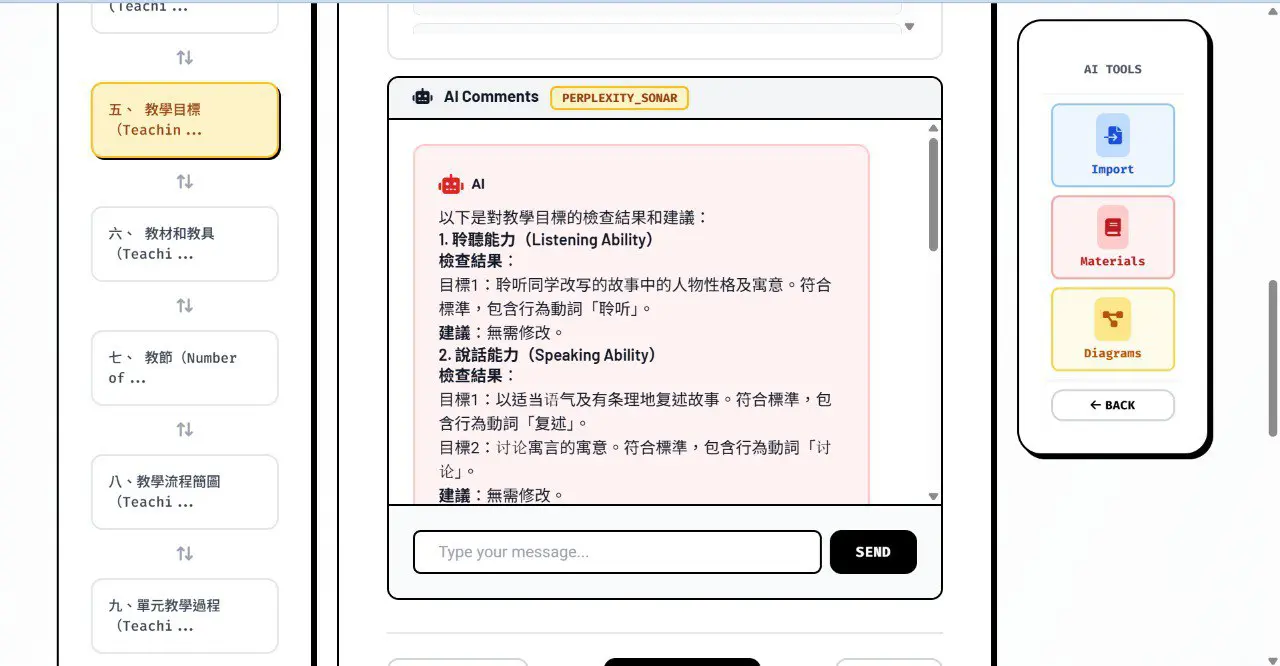
Students learn best when they feel their strengths, values and needs are supported. Plan Master AI was designed specifically to cater to learning diversity, i.e., including students with special educational needs (SEN), gifted learners, and non-native Chinese speakers. Using the advanced technology of Plan Master, pre-service teachers are well guided to address and analyze the learning needs and “pain points” of their students and help them set level-appropriate objectives in their teaching.
Forging EdTech Partnership
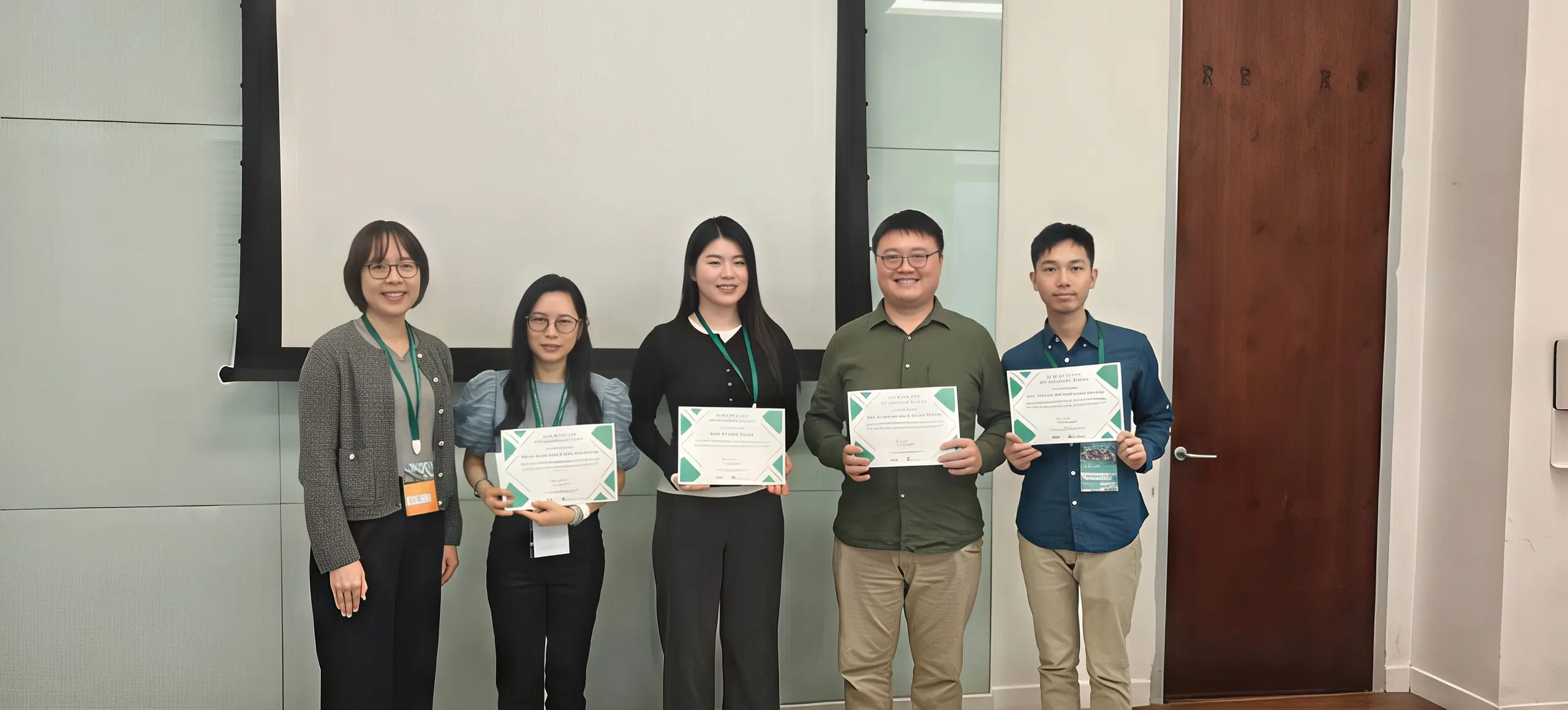
Names (left to right):
- Prof. Lillian Luk, Assistant Professor, TALIC, HKU
- Prof. Ka Yee Elizabeth Loh, Assistant Professor, Language and Literacy Education, Faculty of Education, HKU
- Ms. Yiling Song, EdD Student, Language and Literacy Education, Faculty of Education, HKU
- Dr. Carson Hung, Lecturer / E-learning Technologist, TALIC, HKU
- Mr. Marco Kwan Lok Leung, IT Staff, TALIC, HKU
The project’s success is rooted in the close collaboration between the Faculty of Education and the technical expertise of TALIC. Together, they “plugged” the AI with EDB curriculum guides, specialized course content, and assessment rubrics. This ensures that the feedback provided by the platform is not only technically sound but also aligns with professional standards and HKU’s academic expectations.
How It Works: 13 Dimensions of Rigorous Design
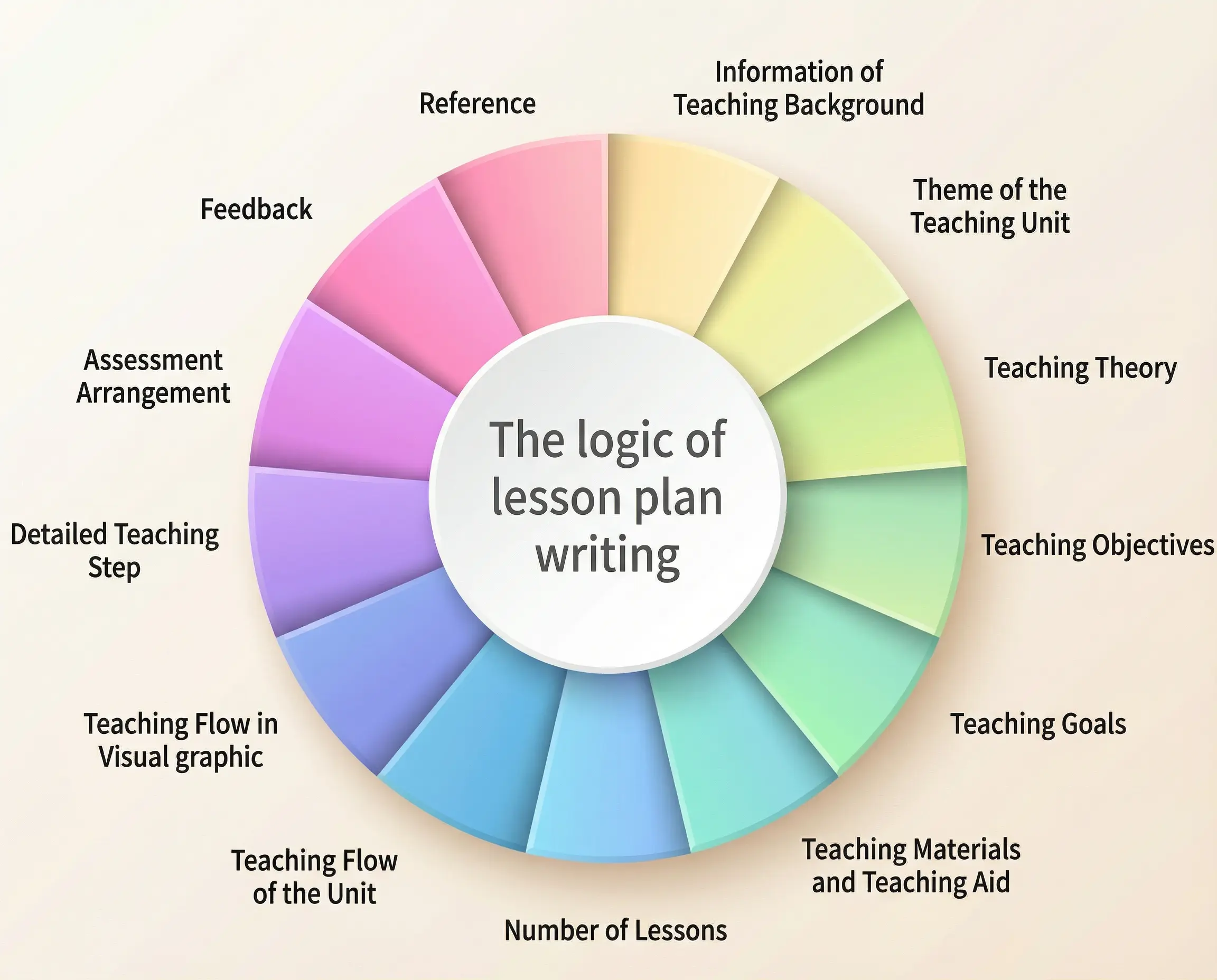
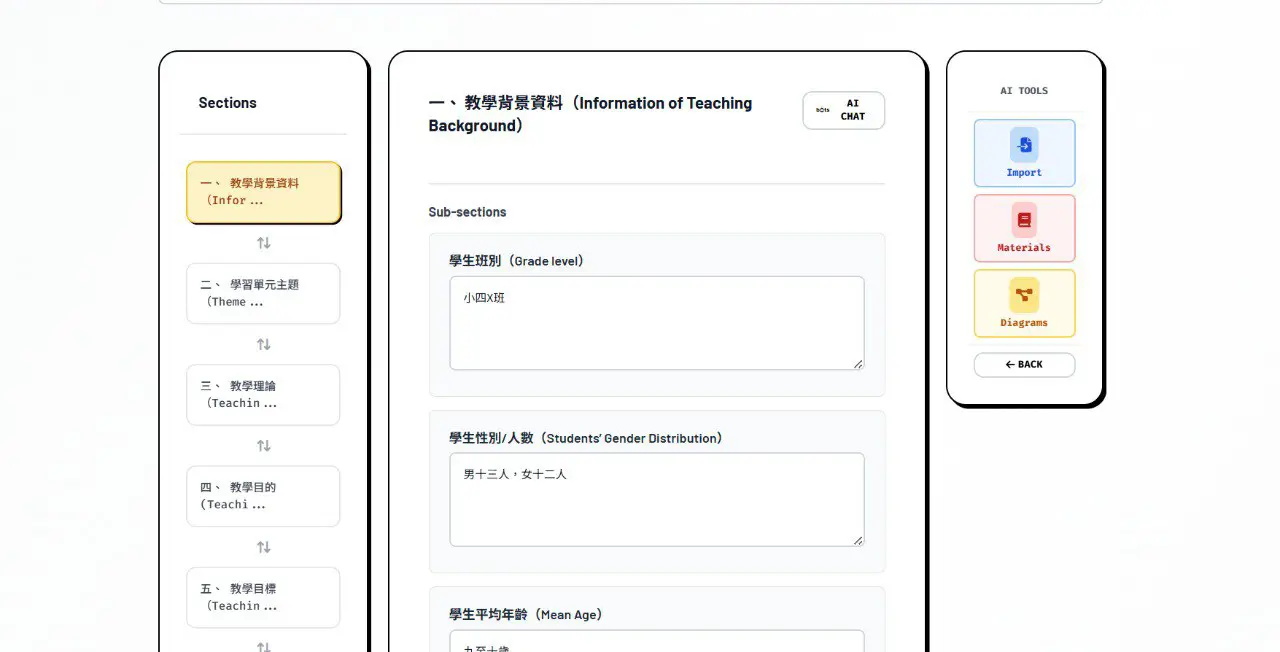
The PM AI platform provides a structured environment where students fill in 13 core sections of a teaching plan, ranging from student background and teaching theory to detailed procedures and assessment methods
- Consistency and Alignment: The AI meticulously checks for logical alignment between teaching objectives, content, and the actual steps of the lesson.
- Scaffolding and Logic: It verifies that teaching steps move from the “most basic” to the “more advanced,” ensuring students learn step-by-step.
- Choice of LLMs: Students have the autonomy to choose from various high-performance models, including Llama 3.3, DeepSeek R1, Perplexity Sonar, and Grok 4, to receive different perspectives on their work.
- Personalized Interaction: Beyond simple checks, the platform offers a Teaching Material Adjustment Model to help PSTs fine-tune the complexity of their content for diverse learners./li>
One critical insight from the developers is that the AI should “not be too smart”; the goal is to stimulate the PST’s thinking process and provide guidance rather than doing the work for them.
Impact: Boosting Confidence and Efficiency
- 63.8%: “PM AI” enhances the quality of their lesson plans
- 62%: ““PM AI” drives teaching innovation”
Empower Our Future Teachers and Educators
Looking forward, the team is expanding Plan Master AI to tackle specific challenges in Classical Chinese education, which many PSTs find to be a “difficult mountain to climb. Future developments will also include multi-modal checking (such as analysing the logic of visual teaching flow diagrams) and expansion into English language teaching.
Plan Master AI is not just a tool; it is a blueprint for how AI can empower the next generation of researchers and educators at HKU.